
Restoration
After the last prisoners left in 1924 the Gaol stood empty, and the closing order of 1929 confirmed the end of its working life. Decades of neglect followed. Roofs failed, floors collapsed and vegetation took hold; by the late 1950s demolition was a real possibility.
In 1960 a group of volunteers formed the Kilmainham Jail Restoration Society and set about saving the building. They worked at weekends and in their own time, clearing rubble, re-roofing the East Wing, reglazing the great skylight and rebuilding the staircases. Money came from public subscription — collection boxes carrying the slogan ‘Support the Kilmainham Jail Restoration’ were rattled all over Dublin.
The Kilmainham Meeting Report, compiled by Lorcan Leonard, set out the state of the Gaol in May 1960 when the Kilmainham Jail Restoration Society began work, and the progress of the restoration to date.
Kilmainham Gaol Museum archive, c.1961–2
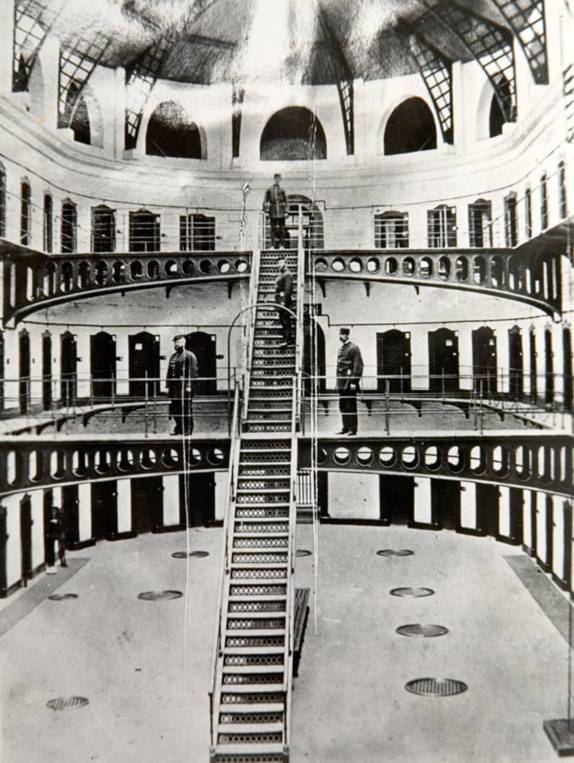
The Society administered Kilmainham Gaol as a heritage site and museum from 1960 until 1986, opening the East Wing to visitors and assembling the first displays. It also began collecting: objects relating to the nationalist and republican history of Ireland from 1798 onwards, including material connected with Charles Stewart Parnell and Michael Collins, belongings of the executed leaders of 1916, and a large body of weaponry from the 1914–23 period.
Ownership passed to the Irish State in 1986 and the site is now managed by the Office of Public Works. A purpose-built museum opened alongside the prison in 1996, giving the collection proper conditions for display, and the top floor of the permanent exhibition is devoted to the story of the volunteers themselves.