
Transportation
For much of the first half of the nineteenth century Kilmainham Gaol acted as a transportation depot. Men, women and children sentenced by courts across Leinster were gathered here to wait for a convict ship, sometimes for months, before being taken down to the quays and sent to New South Wales or Van Diemen’s Land.
The system began in the eighteenth century and continued from Ireland until 1853, with the last convict ships leaving for Western Australia in the 1860s. Sentences of seven years, fourteen years or life were handed down for offences that were frequently very small — the theft of clothing, livestock or food.
Convicted of an agrarian crime in July 1842, John Sheahan was sentenced to twelve months' imprisonment and seven years' transportation. He sailed from Kilmainham in December 1842 and reached Hobart in April 1843.
Kilmainham Gaol Museum collection
Convicts held in the transportation yard exercised in two walking circles, one of which they shared with prisoners under sentence of death. Waiting could be a long ordeal, and the depot’s population contributed heavily to the overcrowding that plagued the Gaol during the Famine decades.
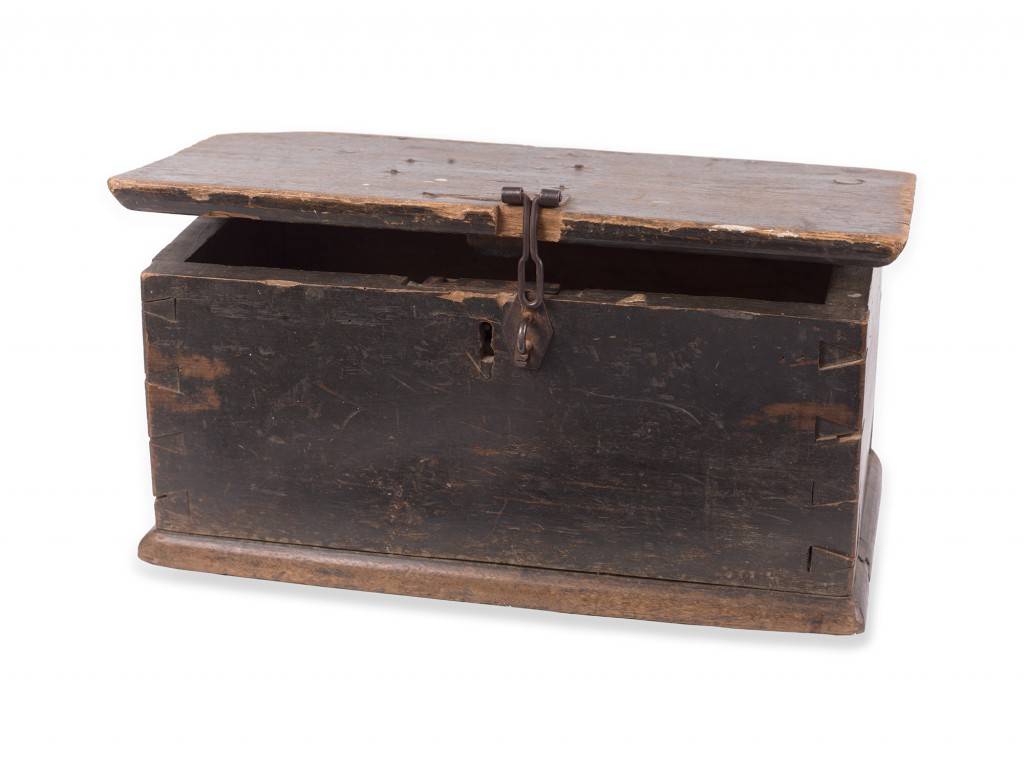
Prisoners were permitted to bring only what they could carry. The small black wooden box in the museum’s collection belonged to John Sheahan of Kildimo, Co. Limerick, and held everything he took with him to Van Diemen’s Land. He was certified free in April 1854 and went on to prosper in Australia.
Records of prisoners transported from Ireland in the nineteenth century are held by the National Archives of Ireland, where a searchable database is available.